Quick answer
Our overall pick is Eco by Naty for its 100% plant-based materials on the skin and multiple certifications for sensitive skin. Other picks suit parents looking for EWG verification, high plant-based percentages, or specific features for newborns and overnight use.
Choosing the best eco-friendly disposable diapers means balancing environmental claims with reliable performance for your baby. Our editors compared manufacturer listings for plant-based materials, third-party certifications, and features like leak protection to find options that prioritize both your baby’s comfort and a reduced environmental footprint. For more on general diapering, see our diapering category.
Quick picks
- 100% plant-based on skin: Eco by Naty Eco-Friendly Baby Diapers (see on Amazon)
- EWG Verified for newborns: Attitude Eco-Conscious Disposable Diapers (see on Amazon)
- Plastic-neutral & 12-hour protection: Ecoriginals Eco Infant Diapers Size 2 (see on Amazon)
10 Best Eco-Friendly Disposable Diapers compared
| # | Product | Best for | Plant-Based Claim | Key Certifications | Free From Claims |
|---|---|---|---|---|---|
| 1 | Eco by Naty Eco-Friendly Baby Diapers | 100% plant-based materials on skin | 100% plant-based on skin | DinCertco, Oeko-Tex Standard 100, Dermatest “Excellent” | Chlorine, PFAS, parabens, phthalates (verified against) |
| 2 | Attitude Eco-Conscious Disposable Diapers | EWG Verified with bamboo fibers | Bamboo-based | EWG Verified, OEKO-TEX Standard 100 | Chlorine free |
| 3 | Bambo Nature Dream Diapers Size 1 | Nordic Swan Eco-labeled & hypoallergenic | Not listed | Nordic Swan Ecolabel | Chlorine-free, parabens, perfume, preservatives |
| 4 | Bambo Nature Baby Diapers Size 3 | Asthma Allergy approved & super absorbent | Not listed | Asthma Allergy approved | Chlorine-free, parabens, perfume, preservatives |
| 5 | Terra Diapers Size 1 Newborn | 85% plant-based with chemical-free indicator | 85% plant-based | Not listed | Chlorine, fragrance, latex, parabens, phthalates, bleach |
| 6 | DYPER Baby Diapers Size 4 | Bamboo viscose liner for wicking | Plant-based layers (bamboo viscose) | Not listed | Chlorine, latex, alcohol, perfumes, PVC, lotions, parabens |
| 7 | JOONYA Baby Diapers Size 1 XS | Patented dry channel technology | Bio-based topsheet (corn starch/Green PE) | Not listed | Latex, chlorine, perfumes, parabens, phthalates, lotions, heavy metals, toxic dyes |
| 8 | JOONYA Baby Diapers Size 2 S | Slim & soft with day-and-night absorbency | Bio-based topsheet (corn starch/Green PE) | Not listed | Latex, chlorine, perfumes, parabens, phthalates, lotions, heavy metals, toxic dyes |
| 9 | The Honest Company Diapers, Size 1 | Hypoallergenic with up to 100% leak protection | Plant-based inner liner | OEKO-TEX certified | Fragrance free |
| 10 | Ecoriginals Eco Infant Diapers Size 2 | Plastic-neutral with 12-hour dryness | 100% plant-based layers | Plastic-neutral certified | Chlorine, phthalates, fragrances, dioxins, bleach, lotions |
How we chose
Our editors compared manufacturer listings and specifications on Amazon as of October 2026, focusing on plant-based material content, third-party certifications (like OEKO-TEX, EWG Verified), claims of being free from specific chemicals, and features for leak protection and sensitive skin. We did not conduct hands-on testing.
Best for certified sensitive skin care
These diapers have notable third-party certifications for skin safety and materials.
1. 100% plant-based materials on skin: Eco by Naty Eco-Friendly Baby Diapers

Pros
- 100% plant-based materials on skin
- DinCertco and Oeko-Tex Standard 100 certified
- Rated "Excellent" for sensitive skin by Dermatest
Cons
- The listing does not mention specific overnight leak protection features.
Eco by Naty diapers are listed as the only diaper with 100% plant-based materials on the skin, including the topsheet, leg cuffs, and outer layer. They are certified by DinCertco and rated “Excellent” for sensitive skin by Dermatest. The listing also notes Oeko-Tex Standard 100 certification and that they are verified against over 1,000 substances.
Best for: Parents prioritizing maximum plant-based content in direct contact with baby’s skin and rigorous dermatological testing.
2. EWG Verified with bamboo fibers: Attitude Eco-Conscious Disposable Diapers

Pros
- EWG Verified
- Made with bamboo fibers
- OEKO-TEX Standard 100 certified
Cons
- The listing does not mention a plant-based percentage for the entire diaper.
Attitude diapers are EWG Verified, meeting the Environmental Working Group’s standards. They are made with natural-origin bamboo fibers from FSC-certified forests and are chlorine-free. The listing states they are OEKO-TEX Standard 100 certified and unscented, designed for delicate newborn skin.
Best for: Parents who want an EWG Verified diaper made with bamboo for their newborn.
3. Nordic Swan Eco-labeled & hypoallergenic: Bambo Nature Dream Diapers Size 1

Pros
- Nordic Swan Ecolabel
- Hypoallergenic and Asthma Allergy approved
- Totally chlorine-free
Cons
- The listing does not mention plant-based material content.
Bambo Nature Dream Diapers are hypoallergenic, totally chlorine-free, and super absorbent with a three-layer design. They have a wetness indicator, flexible waistband, and latex-free leg cuffs. The listing states they were the first to receive the Nordic Swan Ecolabel and are produced using renewable electricity.
Best for: Parents interested in a diaper with a recognized ecolabel (Nordic Swan) and asthma-allergy approval.
4. Asthma Allergy approved & super absorbent: Bambo Nature Baby Diapers Size 3

Pros
- Asthma Allergy approved
- Totally chlorine-free
- Intelligent channel absorption system
Cons
- The listing does not mention plant-based material content.
Bambo Nature Size 3 diapers are hypoallergenic and have been Asthma Allergy approved. They feature an intelligent channel system for absorption, added leakage protection, and a wetness indicator. The listing states they are free of parabens, perfume, and preservatives, and are totally chlorine-free.
Best for: Parents needing a chlorine-free, hypoallergenic diaper with asthma and allergy approval for an older baby.
Best with high plant-based content
These options highlight a significant percentage of plant-based materials in their construction.
5. 85% plant-based with chemical-free indicator: Terra Diapers Size 1 Newborn

Pros
- 85% plant-based materials
- Free from a long list of chemicals
- Plant-based wetness indicator
Cons
- The listing does not mention third-party skin safety certifications like OEKO-TEX.
Terra diapers are made with 85% plant-based materials and feature a featherlike ultra-soft top sheet. The listing states they are free from chlorine, fragrance, latex, parabens, phthalates, and bleach. They use a plant-based wetness indicator and have FSC-certified wood pulp with a super-absorbent polymer for absorption.
Best for: Parents seeking a high percentage of plant-based materials and a comprehensive list of excluded chemicals for a newborn.
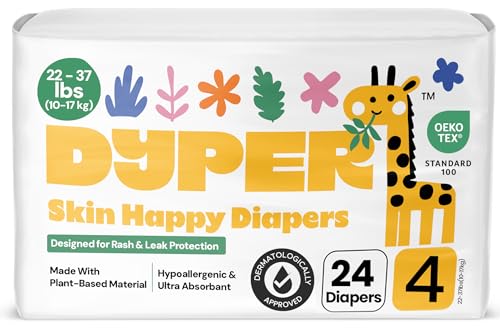
6. Bamboo viscose liner for wicking: DYPER Baby Diapers Size 4
Pros
- Bamboo viscose liner
- Chlorine-free pulp core
- Free from many chemicals like latex and perfume
Cons
- The listing does not specify a plant-based percentage for the entire diaper.
DYPER Size 4 diapers have a liner crafted from bamboo viscose for comfort, wicking, and absorption. The core uses chlorine-free pulp. They feature flexible tapes, a pH-sensitive wetness indicator, and are free from chlorine, latex, alcohol, perfumes, and other listed chemicals.
Best for: Parents of older babies looking for a bamboo-based diaper with a wetness indicator and flexible fit.
7. Patented dry channel technology: JOONYA Baby Diapers Size 1 XS

Pros
- Patented dry channel technology
- Bio-based topsheet from corn starch
- Brand publishes chemical test results
Cons
- Designed for full-term newborns only, according to the listing.
JOONYA Size 1 diapers feature patented dry channel technology designed to move moisture away from skin for 12-hour protection. The bio-based topsheet is made from GMO-free corn starch and Green PE. They are free from latex, chlorine, perfumes, and other listed chemicals, and the brand publishes test results.
Best for: Parents of full-term newborns who want technology-focused moisture movement and published chemical test results.
8. Slim & soft with day-and-night absorbency: JOONYA Baby Diapers Size 2 S

Pros
- Patented dry channel technology
- Ultra slim and soft design
- Free from a long list of chemicals
Cons
- The listing does not mention third-party sustainability certifications.
JOONYA Size 2 diapers also use the patented dry channel technology for 12-hour ultra-dry protection. They have a silky soft, bio-based topsheet made from GMO-free corn starch and Green PE. The listing states they are free from a comprehensive list of harmful chemicals and are ultra slim and soft.
Best for: Parents seeking a slim, soft diaper with dedicated dry channel technology for babies 7-13 lbs.
Best for leak protection and overnight use
These diapers are listed with features designed for extended dryness and preventing leaks.
9. Hypoallergenic with up to 100% leak protection: The Honest Company Diapers, Size 1

Pros
- Up to 100% leak protection claim
- Hypoallergenic and fragrance-free
- OEKO-TEX certified
Cons
- The listing does not specify the percentage of plant-based materials.
The Honest Company Clean Conscious Diapers offer up to 100% leak protection with Comfort Dry Technology and a wetness indicator. They are hypoallergenic, fragrance-free, and made with a plant-based inner liner. The listing notes they are OEKO-TEX certified and have comfy fit leg cuffs and stretchy wings.
Best for: Parents wanting a hypoallergenic, fragrance-free diaper with strong leak protection claims for a newborn.
10. Plastic-neutral with 12-hour dryness: Ecoriginals Eco Infant Diapers Size 2

Pros
- 100% plant-based layers
- Certified plastic-neutral and cruelty-free
- Up to 12-hour dryness claim
Cons
- The listing does not mention a wetness indicator.
Ecoriginals diapers are made with 100% plant-based layers and a pure cotton back sheet. They use Plantcell Technology to lock moisture away for up to 12 hours and have a 3D Leak Guard. The listing states they are certified plastic-neutral, cruelty-free, and free from chlorine, phthalates, and fragrances.
Best for: Parents looking for a plastic-neutral certified diaper that promises long-lasting dryness.
How to choose the best eco-friendly disposable diapers
When comparing the best eco-friendly disposable diapers, it’s helpful to understand what the manufacturer listings actually tell you. Look for specific claims about materials, third-party verifications, and what the product is free from. Always follow the manufacturer’s manual for proper use and fit.
What to look for
- Plant-Based Materials: Listings may specify percentages (e.g., 85% plant-based) or highlight plant-based components like bamboo viscose or corn starch topsheets. This indicates a reduced reliance on fossil-based plastics.
- Third-Party Certifications: Look for labels like OEKO-TEX Standard 100 (tests for harmful substances), EWG Verified, Nordic Swan Ecolabel, or dermatological test ratings. These provide an external check on safety or environmental claims.
- “Free From” Lists: Many eco-friendly diapers explicitly state what they exclude, such as chlorine, fragrances, parabens, phthalates, and latex. This is useful if your baby has sensitive skin or you have specific ingredient concerns.
- Performance Features: Consider listed features for your needs, such as wetness indicators, leak guards, overnight absorbency claims, or flexible fits for active babies. For more on setting up your changing area, see our guide to the best diaper changing tables.
Remember, “eco-friendly” can mean different things. Some brands focus on plant-based materials, others on carbon-neutral production or plastic-neutral certification. Checking the specifics in the listing helps you align the product with your priorities for your baby and the planet.
FAQ
Are plant-based diapers biodegradable?
Most disposable diapers, even those labeled plant-based or eco-friendly, are not fully biodegradable in home composting systems. They often contain some synthetic materials for performance. Check the manufacturer’s listing for specific disposal claims or recycling programs.
What does OEKO-TEX Standard 100 mean for diapers?
OEKO-TEX Standard 100 is a certification that tests textiles for a list of harmful substances. For diapers, it means the materials have been verified against these substances, offering reassurance about what touches your baby’s skin. It does not certify the diaper as organic or biodegradable.
How do I know if a diaper will fit my baby?
Always refer to the manufacturer’s size chart based on your baby’s weight, as sizes vary by brand. The listing title often includes the weight range (e.g., Size 1 for 8-14 lbs). If your baby is near the top of a weight range or you experience leaks, the listing may recommend sizing up.
Why are some diapers labeled “hypoallergenic”?
“Hypoallergenic” typically means the product is formulated to minimize the risk of allergic reactions. In diaper listings, this often coincides with claims of being free from common irritants like fragrances, lotions, and specific chemicals. However, there is no regulated standard for this term.
References
- Amazon product listings and manufacturer specifications (accessed October 2026)
- HealthyChildren.org from the American Academy of Pediatrics
- CDC Infant and Toddler Nutrition